🚨 What is Skuld Stealer 2026?
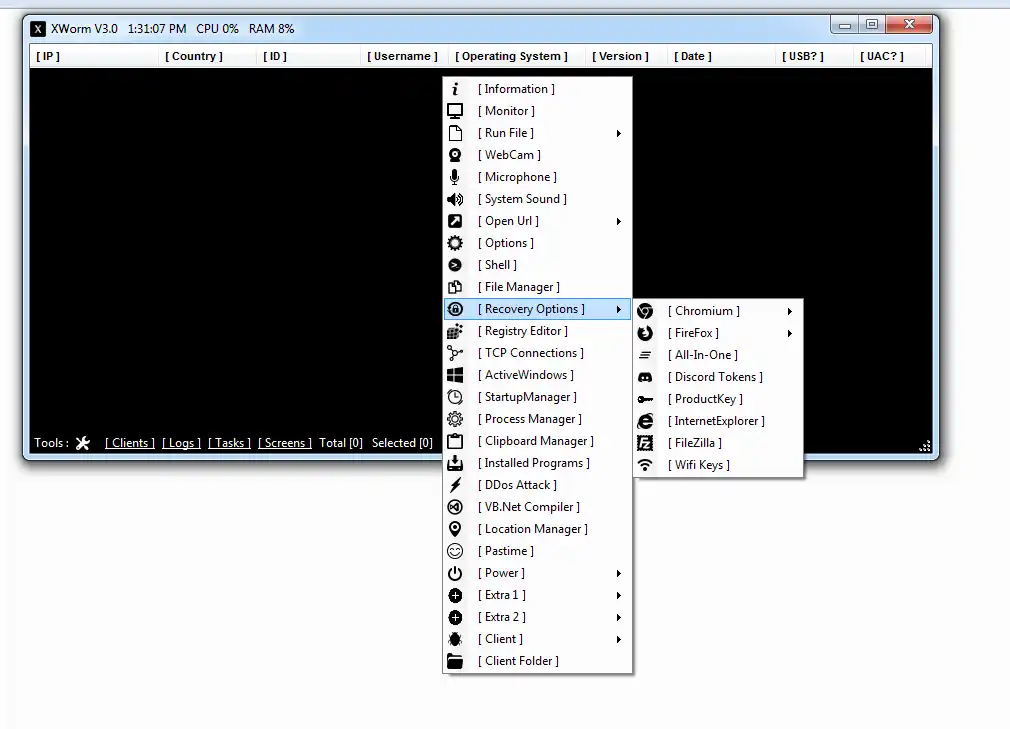
Skuld Stealer 2026 is a modern information-stealing malware written in Golang that focuses on extracting sensitive data from compromised Windows systems. The malware primarily targets Discord tokens, browser credentials, cookies, cryptocurrency wallets, and system information.
The project has attracted attention in the cybersecurity community because its source code is publicly available, allowing attackers to customize and deploy the malware in different cyber campaigns.
Since Skuld Stealer 2026 is developed using Go (Golang), the compiled binaries are usually large and harder to analyze. This characteristic can help attackers evade certain security detection techniques.
Skuld Stealer 2026 falls under the category of infostealer malware, which is commonly used to steal digital credentials, online accounts, and financial information.
⚙️ Key Features of Skuld Stealer
Skuld Stealer 2026 contains several powerful modules that allow it to collect different types of sensitive information from infected systems.
🔐 Credential Theft
One of the primary functions of Skuld Stealer 2026 is stealing stored login credentials from web browsers.
📌 Data Collected
- 🔑 Saved browser passwords
- 👤 Usernames and login credentials
- 📧 Email account details
- 🧾 Autofill and form data
This information can allow attackers to access personal and corporate accounts.
💬 Discord Token Stealing
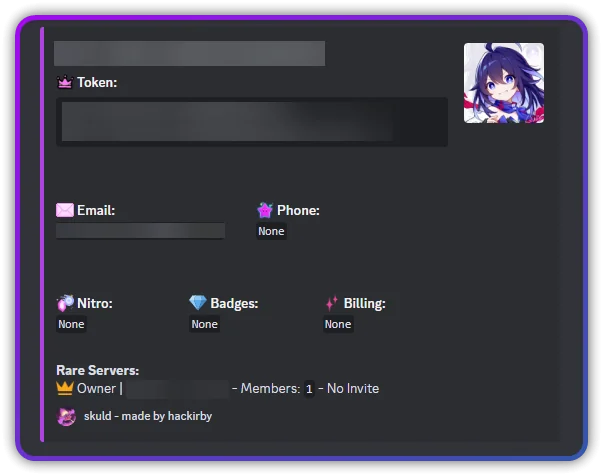
Another major target of Skuld Stealer 2026 is Discord accounts, which are widely used by gamers and online communities.
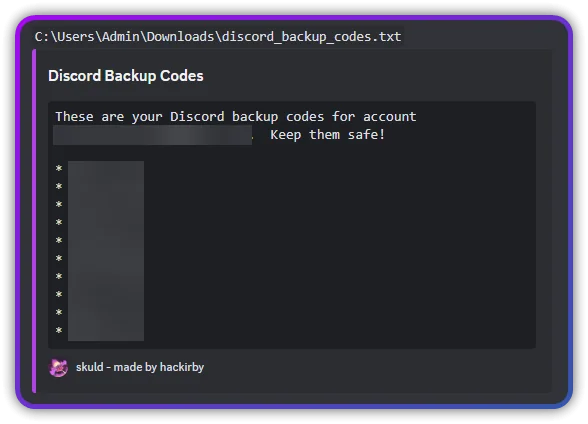
📌 Capabilities
- 🧩 Injects malicious code into Discord files
- 🔐 Captures authentication tokens
- 📩 Sends stolen tokens to attacker servers
- 🔄 Enables instant account hijacking
With a stolen Discord token, attackers can access accounts without needing the password.
🪙 Cryptocurrency Wallet Theft
Skuld Stealer 2026 is also capable of targeting local cryptocurrency wallet files stored on a system.
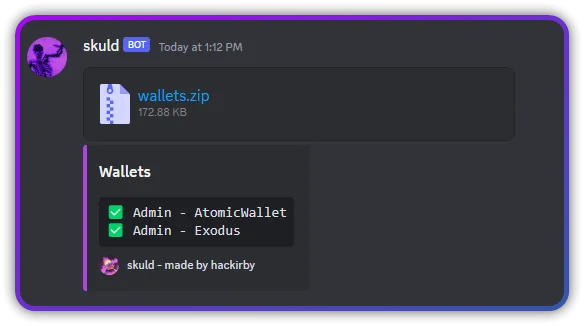
📌 Wallet Data Collected
- 💰 Wallet configuration files
- 🔑 Private keys and wallet credentials
- 📦 Local wallet storage information
This data can allow attackers to steal cryptocurrency assets from victims.
🌐 Browser Data Extraction
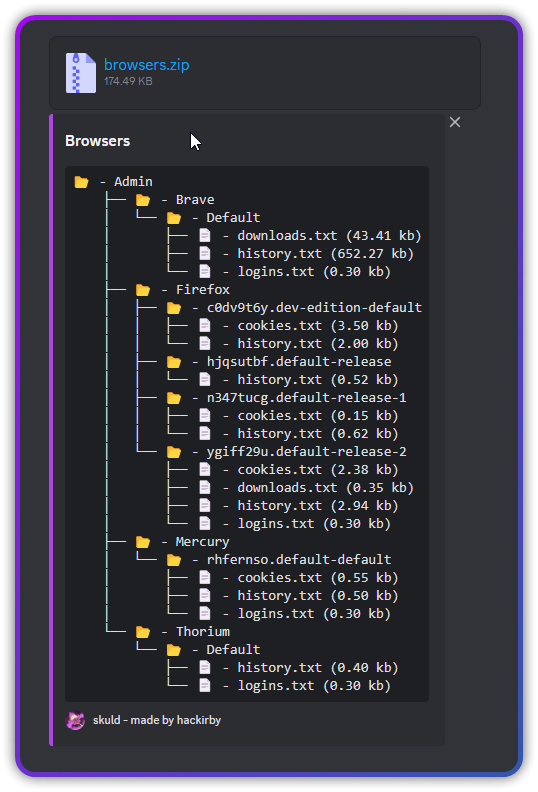
The malware scans installed web browsers and extracts sensitive information.
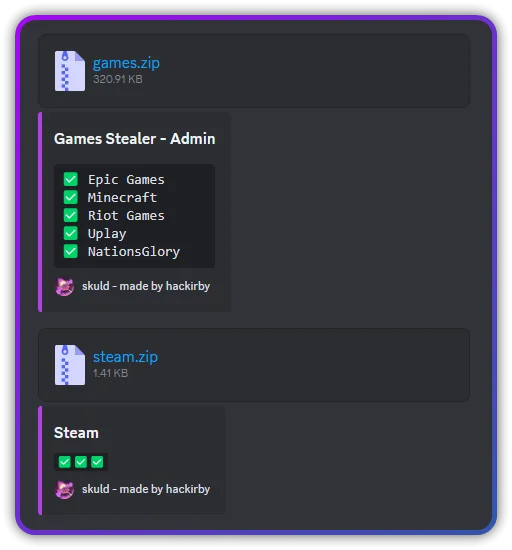
📌 Browser Data Stolen
- 🍪 Cookies and session tokens
- 📜 Browsing history
- 🔑 Stored login credentials
- 🧾 Autofill personal data
These details can be used for session hijacking and account takeover attacks.
🖥️ System Information Collection
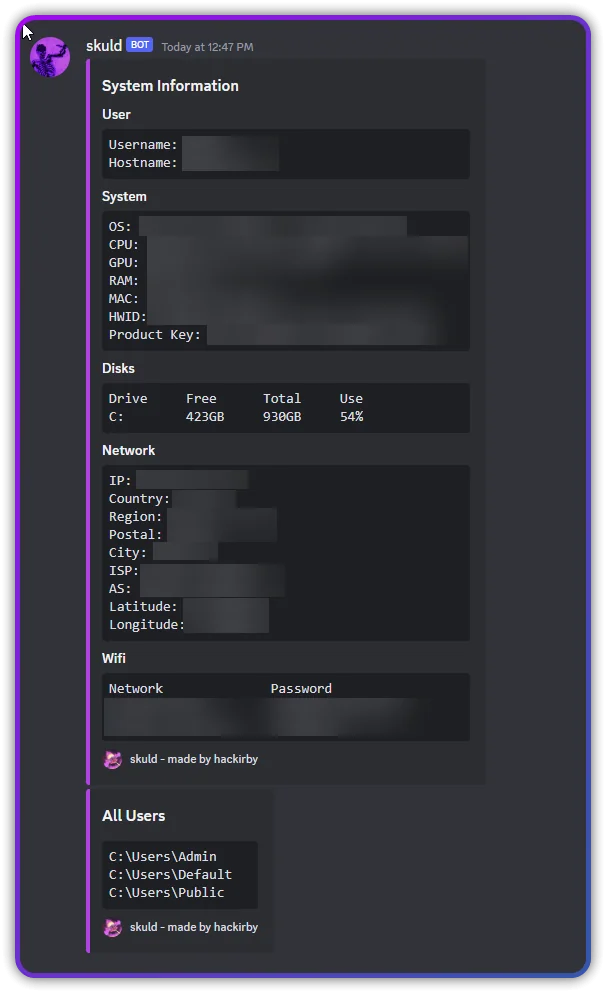
Skuld Stealer 2026 also collects detailed information about the victim’s device.
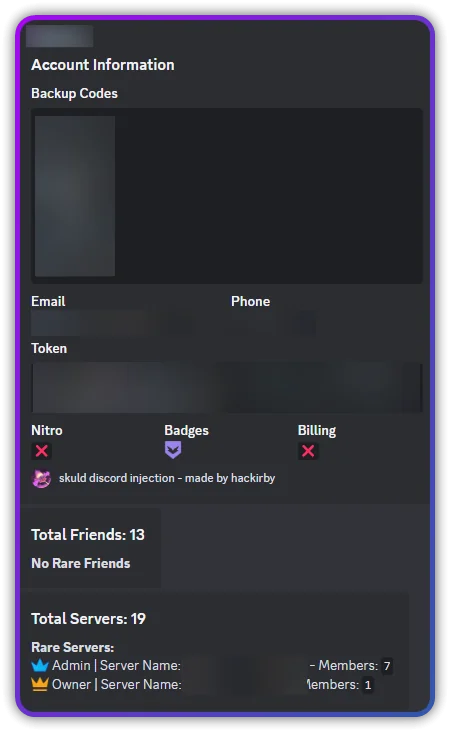
📌 System Data Collected
- 🧠 CPU information
- 🎮 GPU details
- 💾 RAM size
- 🪟 Operating system version
- 🌐 Network and IP details
All collected information is packaged and transmitted to attacker infrastructure.
🧠 How Skuld Stealer Works
Skuld Stealer 2026 usually operates using a multi-stage attack process.
1️⃣ Initial Execution
When the malware is executed on a victim’s system, it loads configuration settings and begins scanning the system for valuable information.
2️⃣ Security Bypass
Skuld Stealer 2026 attempts to bypass certain security protections such as:
- 🛡️ Discord security protections
- 🔍 Basic antivirus detection
- ⚙️ Client modifications designed to protect tokens
3️⃣ Discord Injection
The malware may download and inject a malicious script into Discord installation files.
📌 This injection can capture
- 🔑 Login credentials
- 📧 Email changes
- 🔒 Password updates
- 🔐 Two-factor authentication events
4️⃣ Data Exfiltration
After collecting data, Skuld Stealer 2026 compiles the stolen information and transmits it to attacker-controlled infrastructure.
The data is usually formatted and sent automatically once the collection phase is complete.
🧬 Technical Architecture of Skuld Stealer
💻 Programming Language
Skuld Stealer 2026 is developed using Golang, a modern programming language known for producing large compiled binaries.
⚙️ Advantages for Malware Developers
- ⚡ Fast execution speed
- 📦 Large compiled binaries
- 🔍 Difficult static analysis
- 🌍 Cross-platform compatibility
📂 Malware Modules
Skuld Stealer 2026 typically includes several functional modules.
📌 Core Modules
- 🛡️ Anti-Virtual Machine detection
- 🔐 Browser credential extractor
- 💬 Discord token grabber
- 🪙 Cryptocurrency wallet collector
- 🖥️ System information module
Each module focuses on extracting specific types of sensitive data.
🌍 Cybersecurity Risks of Skuld Stealer
Infostealers like Skuld Stealer 2026 pose serious threats to both individuals and organizations.
⚠️ Major Security Risks
- 🔓 Account hijacking
- 💰 Cryptocurrency theft
- 📧 Email account compromise
- 🕵️ Identity theft
- 🖥️ Loss of sensitive personal data
A single infection can result in multiple compromised accounts and financial losses.
🛡️ How to Protect Against Skuld Stealer
Preventing infostealer infections requires good cybersecurity practices.
🔒 Security Recommendations
🧰 Protection Tips
- 🛑 Avoid downloading suspicious or cracked software
- 🔄 Keep operating systems and browsers updated
- 🛡️ Use reliable antivirus security solutions
- 🔐 Enable multi-factor authentication on accounts
- 🔍 Monitor unusual login activity
These steps can significantly reduce the risk of infection.
📊 Skuld Stealer 2026 vs Other Info Stealers
| Malware | Language | Main Target |
|---|---|---|
| Skuld Stealer 2026 | Golang | Discord tokens & browser data |
| RedLine Stealer | C++ | Browser credentials |
| Raccoon Stealer | C++ | Cryptocurrency wallets |
| Luna Grabber | Python | Discord tokens |
The increasing use of Golang-based malware indicates a shift toward modern programming frameworks in cybercrime.
Download Skuld Stealer
🧾 Final Thoughts
Skuld Stealer 2026 highlights the growing sophistication of modern infostealer malware. Its ability to collect browser credentials, Discord tokens, cryptocurrency wallet files, and detailed system information makes it a serious cybersecurity threat.
Because the malware is modular and easily customizable, it can be adapted for various cybercrime operations. Understanding its functionality is essential for improving detection strategies and strengthening cybersecurity defenses.